What are thermoplastic elastomers?The term elastomer is generically used to designate natural or synthetic materials that have the chemical/physical properties of natural rubber. The most distinctive characteristic of elastomers is the ability to withstand high elastic elongation (i.e. 200% or greater) under stress and return to the original dimension when the stress is released. The properties of thermoplastic elastomer (TPE) combine the rubber-like attributes of a thermoset elastomer and the processing characteristics of a thermoplastic. This is possible because the composition of thermoplastic elastomers is comprised of two dissimilar phases: a soft phase which represents the rubber segment and provides elastic properties and a hard phase which represents the thermoplastic segment and provides both processing ease and full recyclability of the material. To learn more about the uses of thermoplastic elastomers, from resins to rubber, reach out to Celanese today .
Thermoplastic elastomers The term Elastomer is generically used to designate natural or synthetic materials that have the chemical/physical properties of natural rubber. The most distinctive characteristic of Elastomers is the ability to withstand high elastic elongation (i.e. 200% or greater) under stress and return to the original dimension when the stress is released.
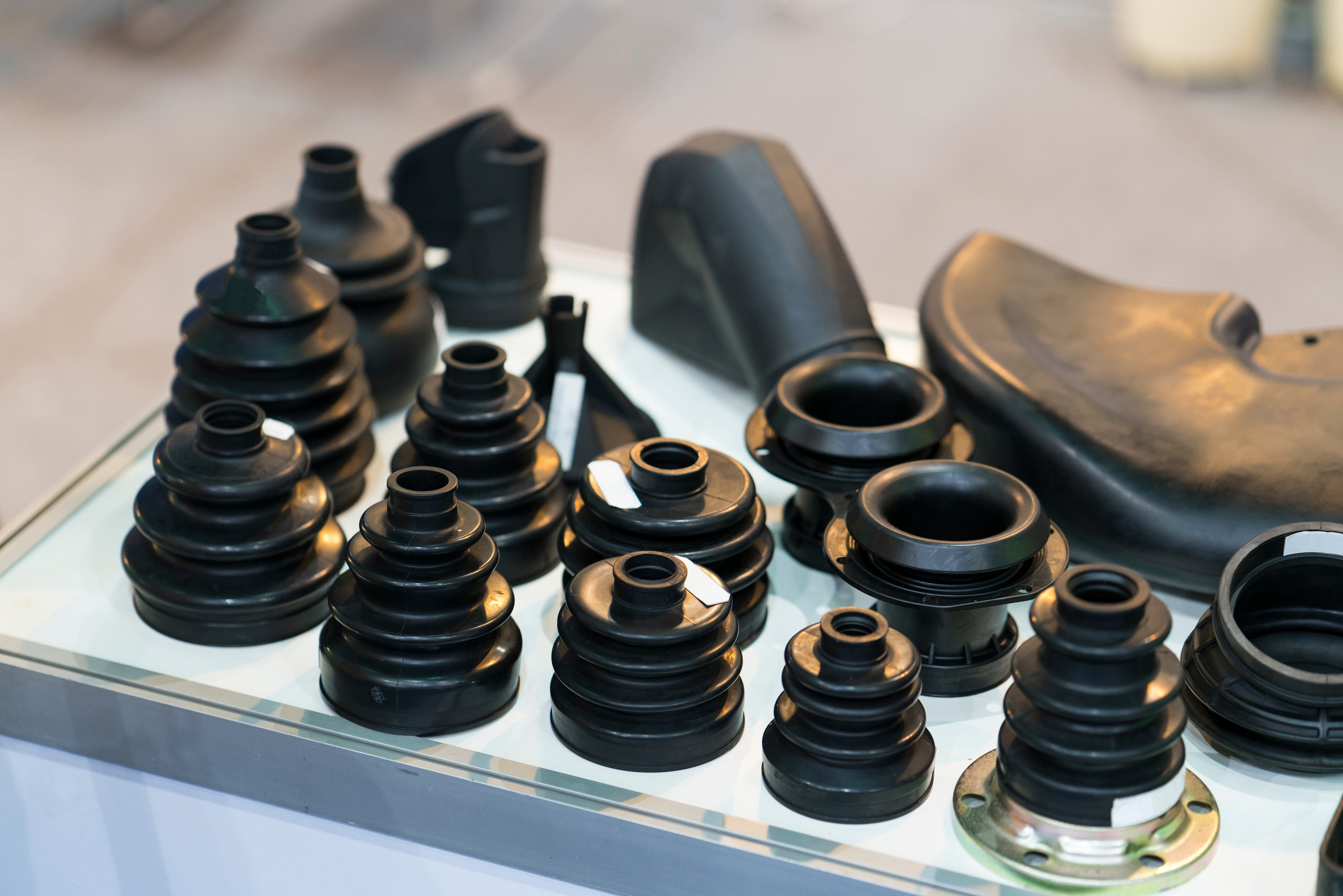
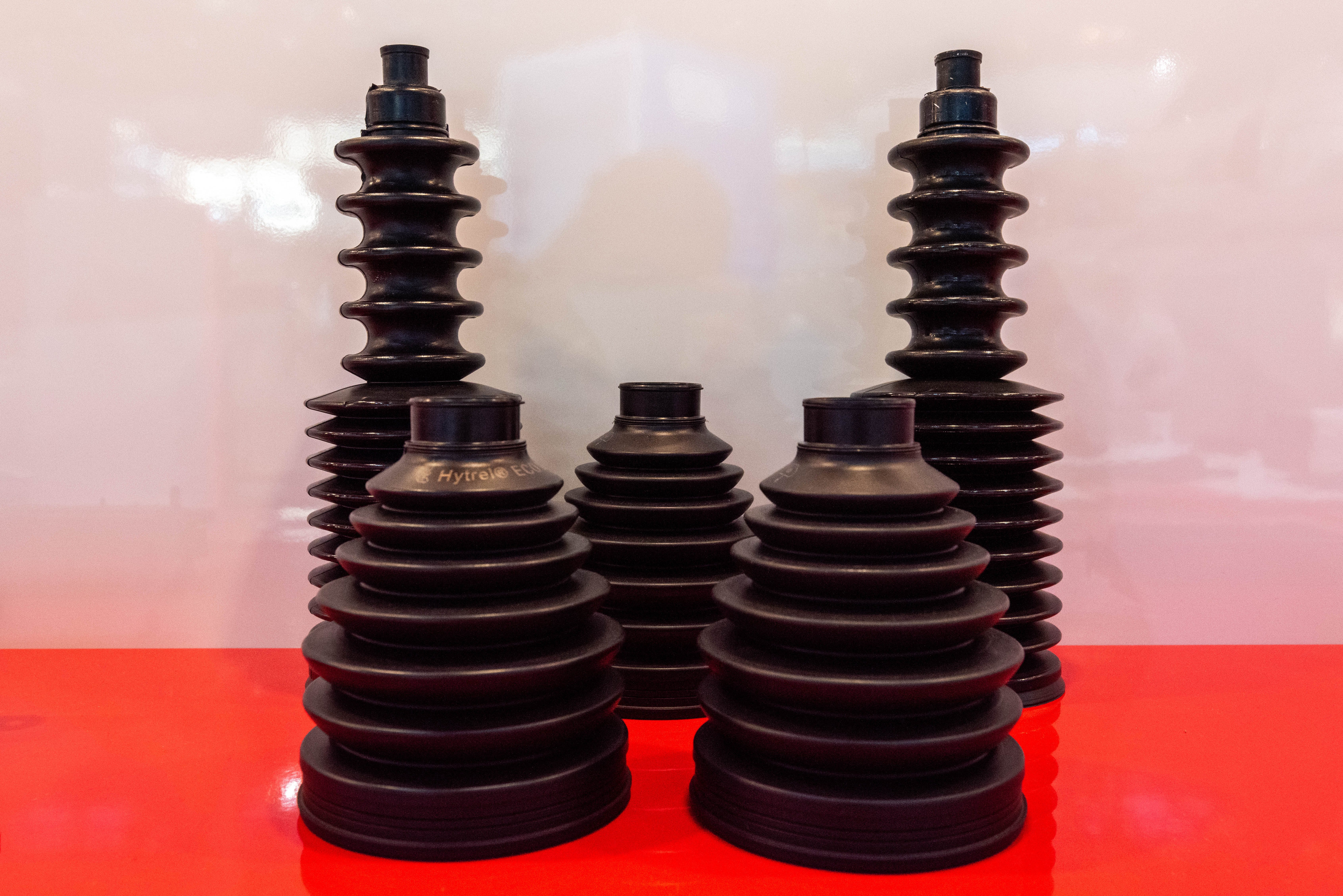
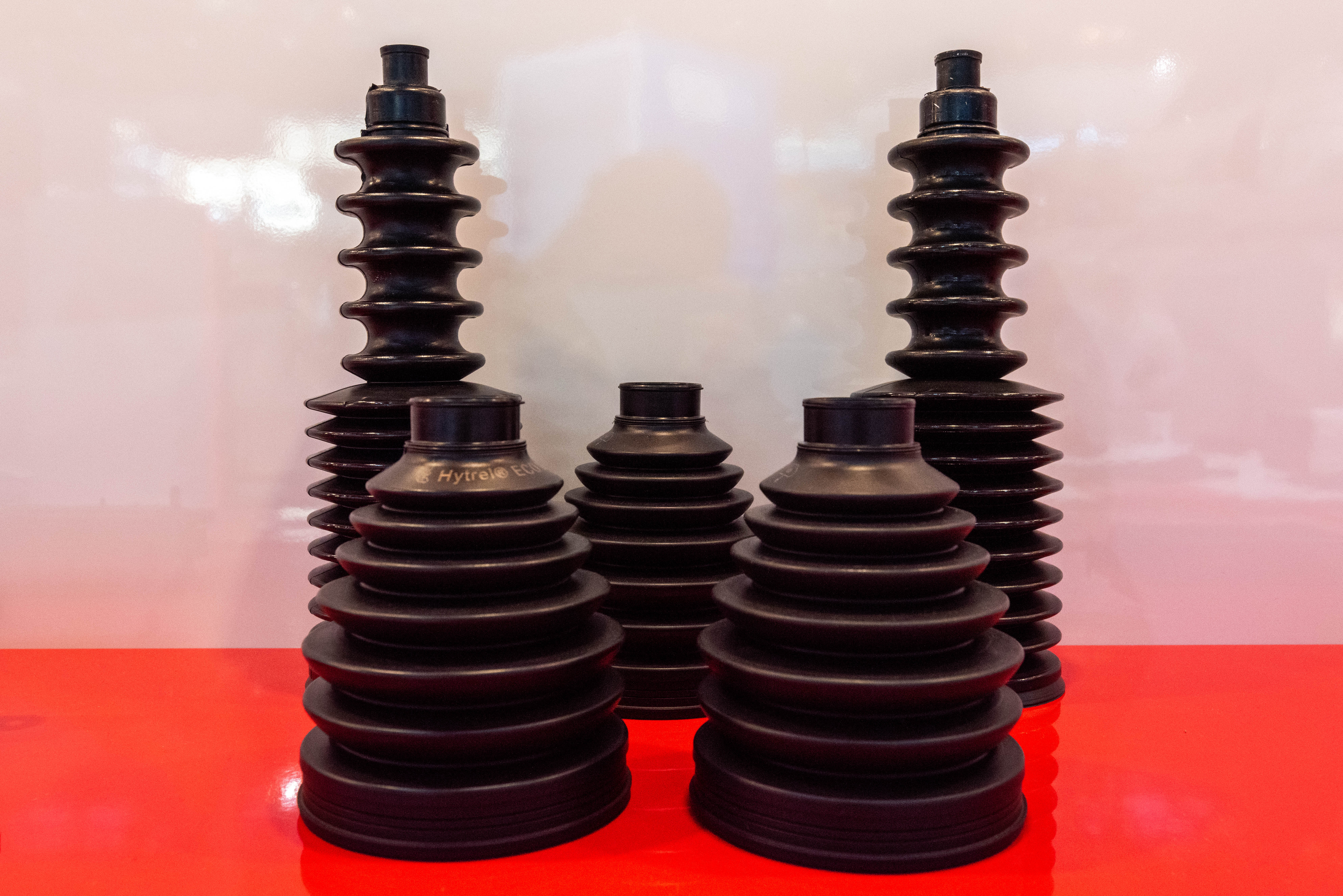
Featured thermoplastic elastomers grades Hytrel TPC Hytrel TPC thermoplastic elastomer is a plasticizer-free thermoplastic copolyester elastomer with outstanding flexibility, stable mechanical performance over a wide temperature range and straightforward processing characteristics. Manufacturers prefer parts made with Hytrel TPC for their resilience, heat and chemical resistance, as well as their strength and durability. This versatile material can flex in multiple directions, cycle after cycle, long after rubber would break. Its durability has made it an essential ingredient in applications that must endure a wide range of temperatures and tough conditions during years of service including CVJ boots, seals and gaskets, air ducts, medical tubing and devices, and other critical applications. Hytrel TPC is compatible with other thermoplastics such as PC, ABS and polyesters, allowing over-molding and coextrusion. Hytrel TPC flexes and recovers, providing excellent flex fatigue and tear resistance, low hysteresis and spring-like properties, even as the material retains exceptional toughness, impact and creep resistance. Hytrel TPC solutions provide chemical resistance to oils, fuels, hydrocarbon-based solvents and many other chemicals. Hytrel TPC can be reground and blended with virgin polymer. With Shore D hardness of 30 to 80, Hytrel TPC bridges the performance of rubbers and thermoplastics. Formulations are available for food contact and special and premium control grades for medical applications. Foamable grades of Hytrel TPC, made using supercritical gas injection, help manufacturers avoid generation of VOCs and are a recyclable alternative to thermoset foams. Santoprene TPV Santoprene TPV is a thermoplastic elastomer that has been vulcanized (TPV) and widely recognized as the industry-standard of TPV. It is made of an elastomeric phase (dynamically vulcanized EPDM rubber) which is deeply dispersed in a polyolefinic thermoplastic matrix, whose combination determines a real plasto-elastomeric alloy characterized by high performance and extremely easy processability. The thermoplastic matrix allows Santoprene TPV to be processed in an easy, inexpensive way by means of traditional technologies used for thermoplastic materials and to be fully recyclable, while its elastomeric phase features typically rubber-like properties, such as elastic recovery and softness. Forflex TPO The Forflex TPO thermoplastic elastomer family consists of heterophasic compounds based on an amorphous elastomeric phase and a crystalline phase, usually both of a polyolefinic nature. This chemical composition confers elastic properties to finished products up to a temperature of 70 - 80 °C. These compounds are classified as TPOs. Laprene TPS Laprene TPS / SEBS refers to a family of Thermoplastic Elastomers in which the elastic phase is made of SEBS [Styrene-Ethylene-Butylene-Styrene] rubber and the plastic phase has usually a polyolefinic nature. The plastic phase allows Laprene TPS to be processed by means of the traditional technologies used for thermoplastic materials and to be fully recyclable, while the elastomeric phase features typically rubber-like performance such as elastic recovery and softness. The chemical nature of the SEBS rubber is saturated, which means it has no double bonds in the molecule and this particular structure gives Laprene TPS special resistance to weathering and UV ageing. Sofprene TPS / SBS is a Thermoplastic Elastomer in which the elastomeric phase is based on SBS [Styrene-Butadiene-Styrene block copolymer] rubber and the plastic phase is usually made of either polyolefinic or styrenic polymers. Sofprene TPS / SBS offers excellent elastic properties and maintains its flexibility even at very low temperatures (-50 °C). The unsaturated nature of the SBS rubber makes Sofprene TPS / SBS vulnerable to UV, heat and ozone; however, it is possible to improve its resistance to these agents by using appropriate additives. Sofprene TPS / SBS can be easily processed by means of the traditional technologies used for thermoplastic materials and it is fully recyclable.